


Future Trends
Future trends in machine vision lighting are shaped by the convergence of artificial intelligence, adaptive illumination, embedded processing, and Industry 4.0 connectivity. LED illuminator technology is evolving toward programmable multi-wavelength systems that adjust spectrum and intensity in response to inspection feedback, miniaturised formats for embedded vision and smart camera integration, and network-connected designs supporting remote diagnostics and predictive maintenance. Hyperspectral and SWIR illumination are expanding from specialist research applications into mainstream industrial quality control. AI-driven lighting optimisation is reducing the expert knowledge required to configure complex vision systems. RODER Vision tracks and incorporates emerging illumination technologies to ensure that our LED illuminators remain compatible with next-generation machine vision platforms, helping customers future-proof their inspection infrastructure and adopt new capabilities as they become production-ready.
-
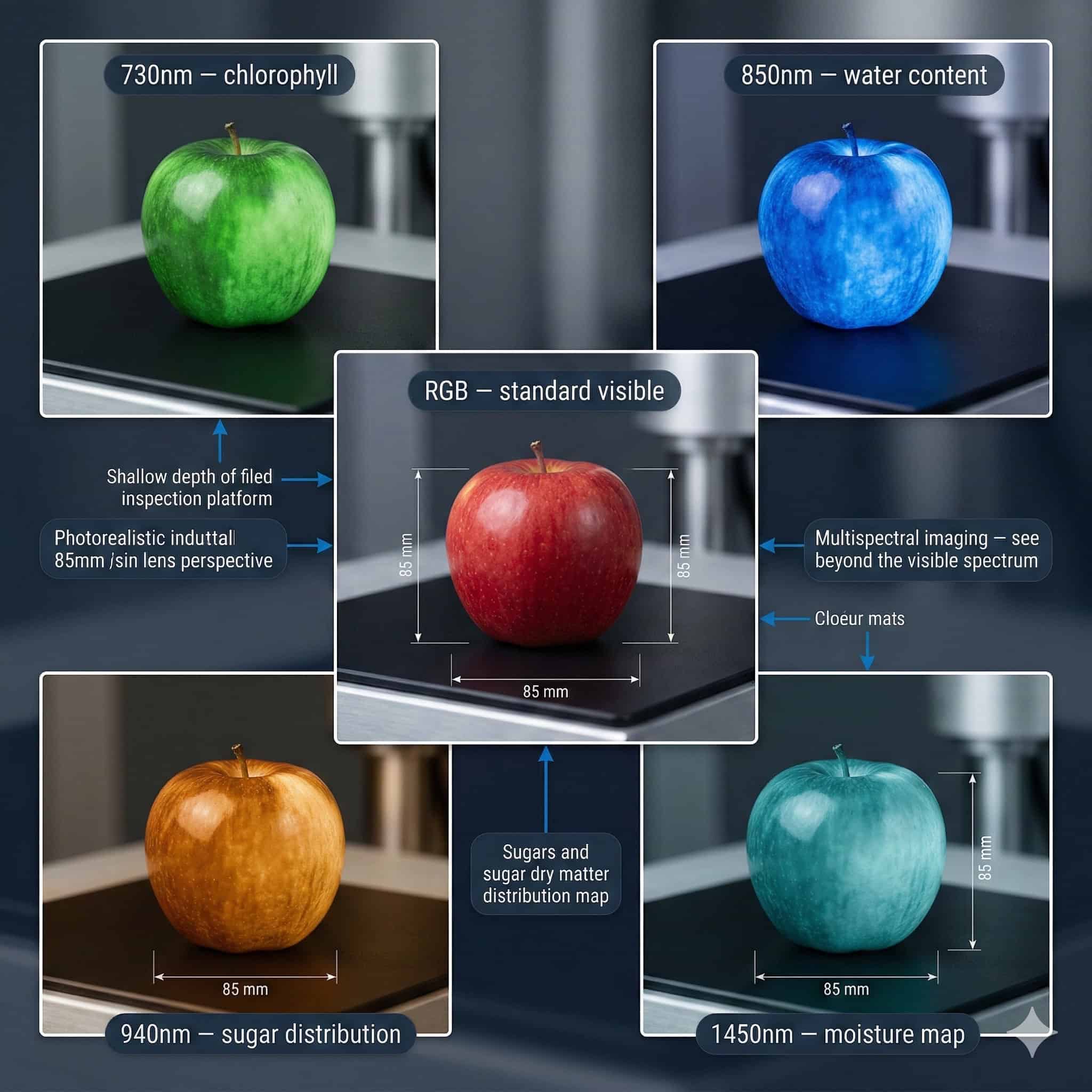
Hyperspectral and Multispectral Imaging: The New Frontier in Industrial Quality Control
Hyperspectral and multispectral imaging see beyond what conventional monochrome or colour cameras can detect, revealing composition, contamination and material properties invisible to standard vision systems. See the state of the art and where it is heading.
-

Machine Vision Market Trends 2025–2030: The Forces Driving Industrial Inspection Growth
The global machine vision market is forecast to top $18 billion by 2030. What is driving this growth? Explore the key trends: AI adoption, manufacturing localisation, e-commerce automation, sustainability, and the rise of smart factories.
-
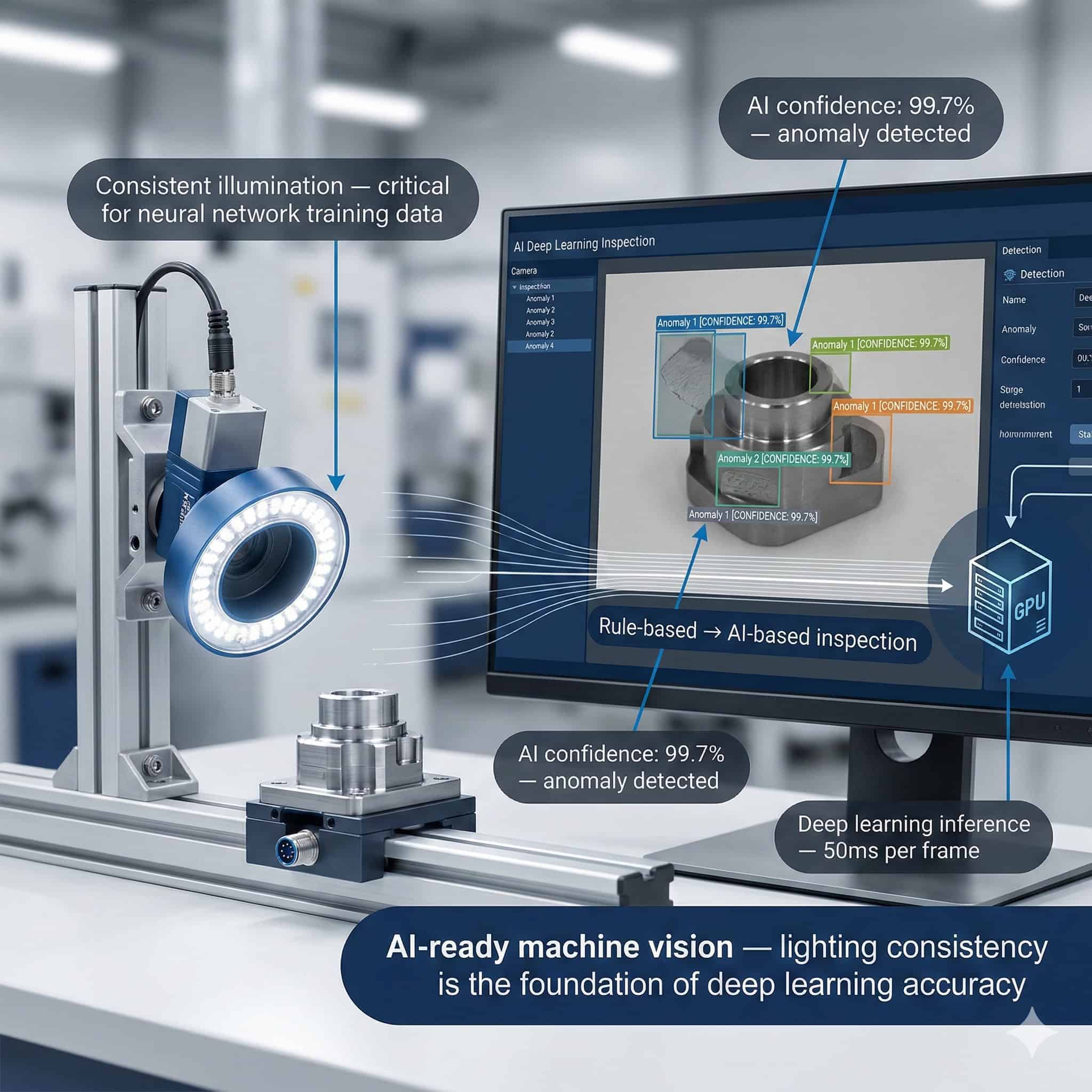
AI-Powered Machine Vision: How Deep Learning Reshapes Inspection Lighting Requirements
Deep learning is reshaping industrial inspection, yet AI-based machine vision still leans on consistent, well-designed illumination. See how neural networks change lighting requirements, why dataset quality starts with the light source, and what AI-ready illumination means in practice.