


Machine Vision Lighting for Pharmaceutical and Medical Inspection
- Validated, zero-defect inspection of blisters, vials, syringes and labels.
- Transparent and reflective glass and plastic that need transmitted light.
- Tamper evidence and serialization verified with full traceability.
- Backlight, diffuse, UV and dark-field techniques selected per defect type.
- Each future application note will link to the matching RODER products and technology pages.
Pharmaceutical and medical production demands the strictest inspection in manufacturing. Patient safety is at stake, so every container, dose and label must be verified. Moreover, regulators require validated processes and complete traceability. Therefore, machine vision and its illumination must be reliable, repeatable and documented. This sector hub introduces the inspection tasks of pharmaceutical and medical lines. In addition, it links each task to the recommended technique and to the matching RODER Vision products. In short, it is the entry point for engineers lighting blister, vial, syringe and medical-device lines. Moreover, it gathers the sector know-how in one structured place.
Why Pharmaceutical Inspection Is Critical
Safety is the first driver. A missing tablet or a cracked vial can harm a patient, so the tolerance for defects is effectively zero. Consequently, inspection runs at one hundred percent, not by sampling. As a result, stable lighting is the foundation of every decision.
Regulation is the second driver. Good Manufacturing Practice requires validated, documented and repeatable systems. Therefore, the illumination must hold constant intensity over time and across machines. Otherwise, a drift in brightness could invalidate the qualified process.
Materials are the third driver. Glass vials, clear ampoules and PET syringes transmit and reflect light in difficult ways. Because of this behaviour, transmitted and diffuse geometries are usually preferred. In addition, the right wavelength can expose features that the eye cannot see.
Environment is the fourth driver. Cleanrooms require equipment that does not shed particles or trap dirt. Therefore, illuminator housings must be smooth, sealed and easy to clean. Moreover, low heat output protects temperature-sensitive products. As a result, well-designed LED lighting suits these controlled spaces particularly well.
The Main Inspection Tasks
This sector groups several recurring tasks. First, blister inspection verifies tablet presence, integrity and correct colour in every pocket. Next, container inspection checks vials, ampoules and syringes for cracks, chips and dimensional defects. In addition, fill-level control confirms the correct dose in transparent containers.
Particle detection is equally critical. Here a dark field or backlight setup reveals foreign particles floating in an injectable liquid. Furthermore, label and print inspection confirms text, lot codes and serialization for anti-counterfeiting. Finally, closure and tamper-evidence checks confirm safe, intact packaging before release.
Medical devices add their own checks. For example, syringe assembly, needle presence and graduation marks must be verified precisely. Moreover, single-use device packaging is inspected for seal integrity. Therefore, the same lighting principles extend from drugs to medical hardware.
Recommended Illumination Techniques
Each task maps to a specific geometry. For fill level, cracks and particles in clear containers, backlight illumination gives the cleanest contrast. On glossy blisters and curved vials, diffuse and dome lighting suppress reflections. To read codes on round containers, a ring light provides symmetric illumination.
Spectrum extends what is visible. For instance, ultraviolet light excites fluorescence, which exposes leaks and security markers. By contrast, dark-field lighting highlights scratches and floating particles. Therefore, geometry and wavelength are always chosen together for the task.
Speed and stability close the design. Because filling lines are fast, the light often runs in pulsed mode to freeze motion. In addition, a current-stabilised driver keeps brightness constant during validation and production. As a result, the system stays qualified over long campaigns.
Recommended VISIOTRONIX Illuminators
Four illuminator series cover most pharmaceutical and medical inspection tasks. The table below links each one to its product page, with the job it does on the line.
| Series | Illuminator family | Typical use | |
|---|---|---|---|
 | BL3 Series | LED Backlight Illuminators | Transmitted light for fill level, cracks and particles in clear containers |
 | FD2 Series | LED Flat Dome Illuminators | Diffuse dome light that suppresses reflections on blisters and curved vials |
 | DC6 Series | LED Ring Illuminators | Symmetric light around the lens to read codes on round containers |
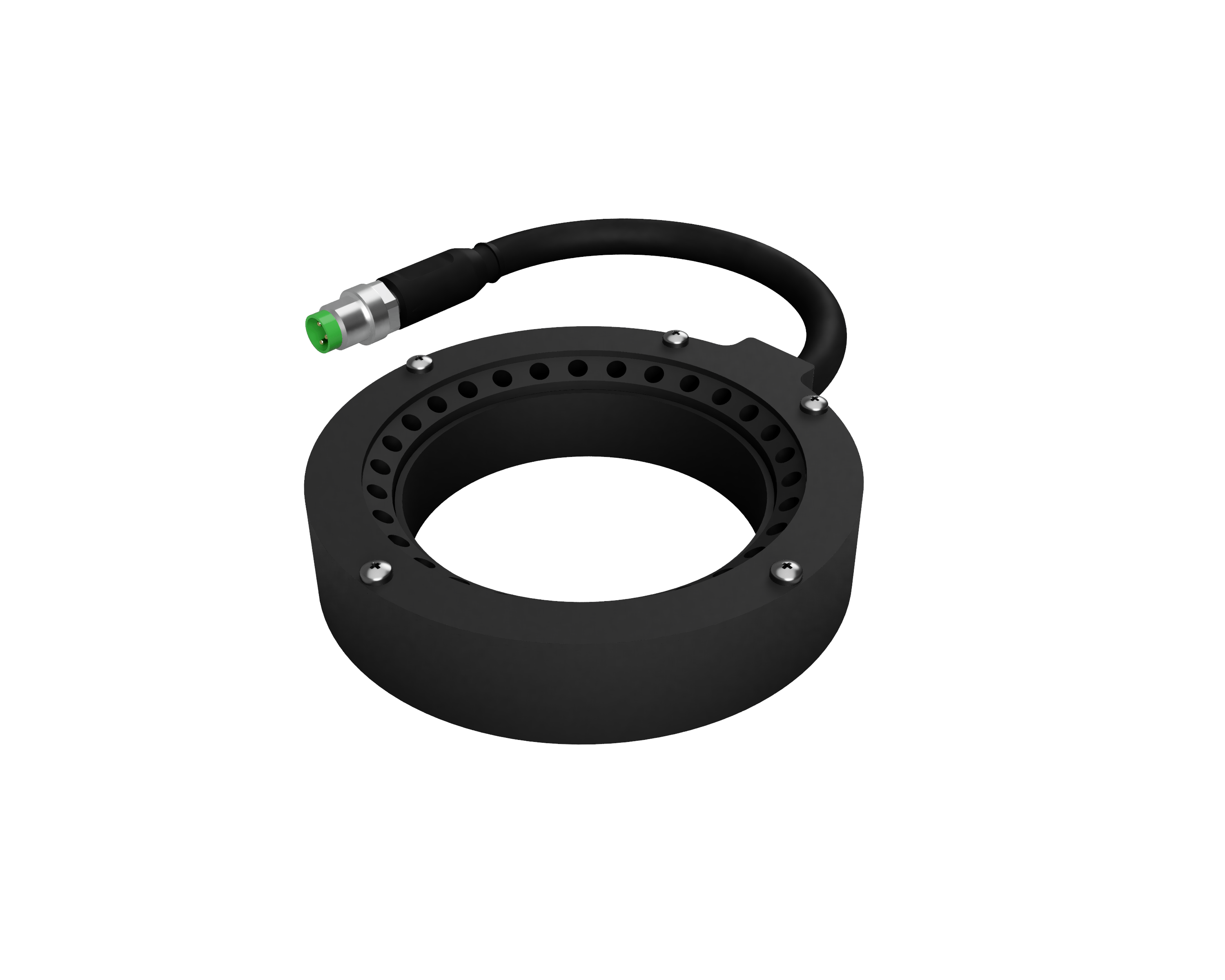 | DC2 Series | LED Ring Illuminators | Dark-field light that highlights scratches and floating particles |
Most pharmaceutical and medical tasks use a focused set of illuminator families. For fill level, particles and container integrity, choose LED Backlight Illuminators. On round containers and code reading, use LED Ring Illuminators. To control glare on glossy blisters, consider LED Flat Dome Illuminators.
Where fluorescence or focused inspection is required, LED Spot Illuminators and custom UV configurations help. Beyond catalogue options, VISIOTRONIX provides engineering support for validated, OEM and custom geometries. In practice, the right mix of geometry, wavelength and stability turns a critical inspection into a documented, repeatable check. Therefore, start from the task that matches your line, and then follow the links to the technology and product pages.
Validation, Serialization and Traceability
Serialization is now a legal requirement in many markets. Consequently, each pack carries a unique, readable code for track-and-trace. Moreover, the code must survive handling and remain legible at speed. Therefore, controlled, glare-free lighting is essential for reliable reading.
Documentation completes the workflow. Every inspection result and image is logged for audit and release. In addition, the lighting setup is recorded as part of the qualified configuration. As a result, repeatable illumination supports both detection and regulatory compliance.
Application Notes in Pharmaceutical & Medical
The detailed application notes for this sector are in preparation. Soon, each note will describe a specific inspection, the recommended lighting and the related RODER products. In the meantime, the technology and product links on this page already guide the main choices.
Frequently Asked Questions
Dark field or backlight setups work best for particle detection. Because the particles scatter or block transmitted light, they appear as bright or dark points against a clean background. As a result, foreign bodies become clearly visible.
Good Manufacturing Practice requires stable, documented illumination. Therefore, the light source must keep constant intensity and be recorded as part of the qualified configuration. Current-stabilised drivers and repeatable mounting support this validation.
Ultraviolet light excites fluorescence in many materials and tracers. Consequently, it can reveal leaks, security markers and certain contaminants that stay invisible under white light. For this reason, UV is a useful complement to backlight and diffuse geometries.
Round vials curve the surface and create reflections. A ring light gives symmetric, orientation-independent illumination, while a diffuser reduces glare. As a result, the serialization code stays sharp and readable at line speed.

Do you want help choosing the right product?
Contacts & Information
Contact for general information : info@roder.it
Systems and Sensor Integration Partner : www.roder.it
RODER Artificial Vision Division : www.visiotronix.com
RODER Instruments Division : www.innovacheck.com
More information about VISIOTRONIX : about us
The information on this website is provided for informational purposes only. Although it has been prepared with the utmost care, it does not constitute a contractual offer or a binding commitment to supply. It may contain transcription, translation, or typographical errors. For precise and up-to-date information, please contact our company directly.
Please note: Some images on this website have been intentionally generated using Artificial Intelligence (AI). This is due to the fact that, for many applications and projects, it is not possible to disclose photographs of the actual installation or system due to confidentiality agreements, contractual clauses, and Non-Disclosure Agreements (NDAs).